Cart
0
Festive Home Makeover: 7 Ways to Refresh Your Home with Rugs
Festive decorating has a funny way of making us look at our homes differently. The sofa that felt perfectly fine yesterday suddenly looks a little tired, the empty corner starts calling for attention, and the living room seems to be asking for something that makes it feel more welcoming. You could repaint the walls, replace furniture or spend hours buying dozens of decorative accessories, but there is a much simpler way to create a noticeable transformation: change what is under your feet. A thoughtfully chosen rug can alter the colour balance, warmth, texture and personality of an entire room without requiring a major renovation. That makes rugs particularly useful when you want a festive home makeover that feels impressive but remains practical.
Current 2026 interior trends are moving toward warmer colours, natural materials, tactile surfaces and more personal interiors rather than rooms that look overly coordinated. Indian décor coverage is also highlighting earthy tones, handmade elements, organic shapes and warm metallic accents. (Rug Store) Rugs fit naturally into this movement because they can combine colour, craft and comfort in one relatively simple addition. They also have an advantage that wall décor cannot provide: a rug visually connects the furniture, floor and surrounding accessories, almost like a frame around a painting.
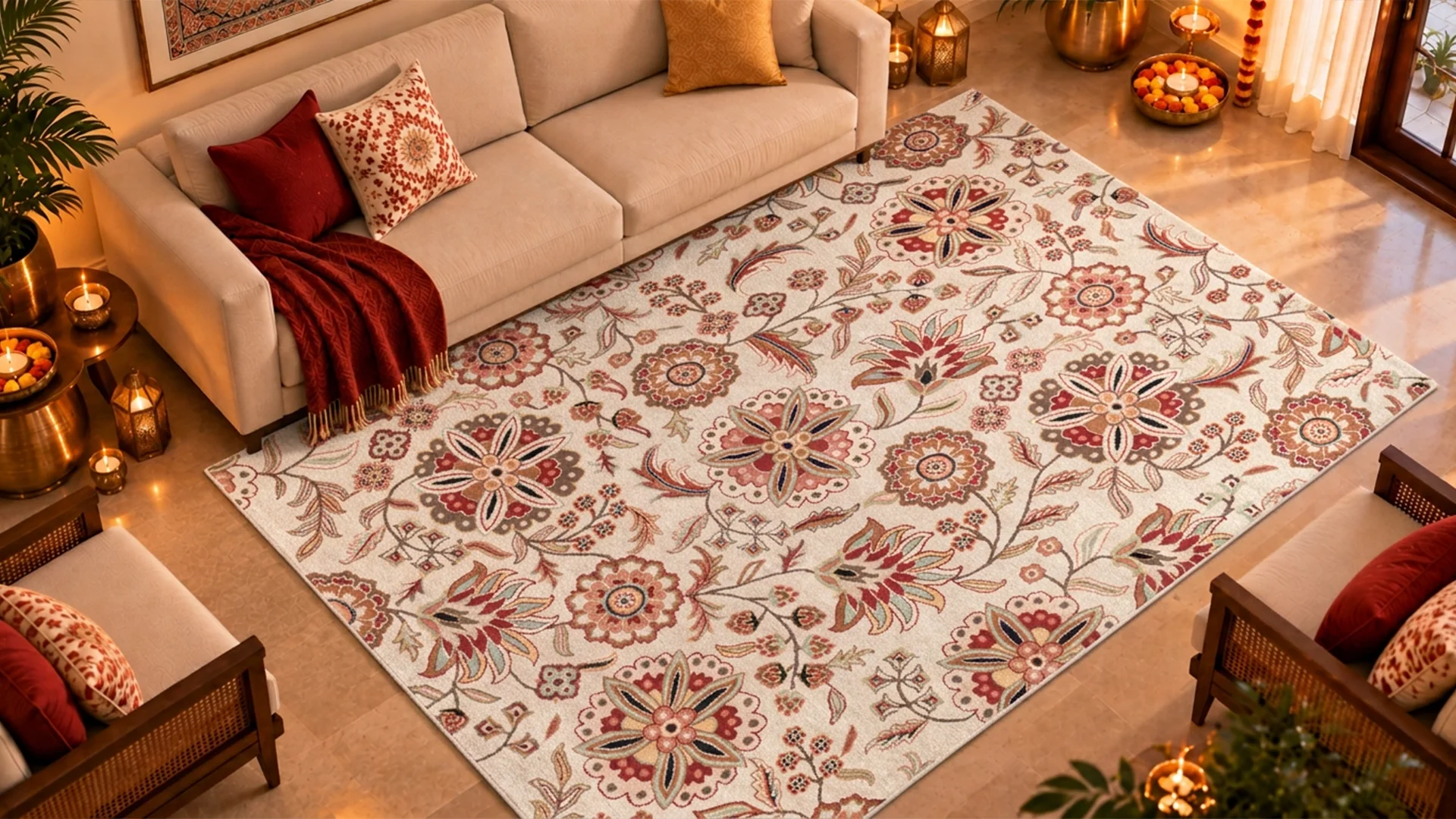
For the festive season, that framing effect becomes even more powerful. Warm lamps, diyas, flowers, cushions and metallic décor can all look disconnected when each element is chosen independently. Put them together over the right rug, however, and the room begins to feel intentional. Whether you are preparing for Diwali, Navratri, Christmas, Eid, a wedding celebration or simply a season of family gatherings, these seven rug ideas can help you refresh your home without starting from scratch.
Why Rugs Matter in a Festive Home Makeover
Think about a room as an outfit. The sofa might be the jacket, the curtains could be the shirt, cushions are the accessories and lighting is the jewellery. The rug is the pair of shoes that quietly determines whether everything feels connected. It occupies a large visual area, sits beneath the furniture and influences the way colours and textures are perceived. That is why replacing or repositioning a rug can sometimes create a stronger transformation than adding several small decorative objects. Indian homeowners are increasingly treating rugs as design pieces rather than purely functional floor coverings, with recent coverage describing them as statement elements that can shape the mood and identity of a room. (Business Standard)
The festive season makes this especially relevant because homes naturally become more layered. There may be flowers, lamps, candles, brass décor, cushions, throws, tableware and other decorative details competing for attention. A rug provides a visual foundation for those elements. A neutral rug can calm an otherwise colourful room, while a richly patterned rug can become the decorative centrepiece around which simpler accessories are arranged. The key is not to ask, “What festive decoration can I add?” but rather, “What feeling do I want this room to create?” Once you answer that question, the right rug becomes much easier to select.
The 2026 Shift Toward Warm, Personal Interiors
The current direction in interiors is particularly useful for festive styling because designers and homeowners are showing greater interest in warmth, texture and individuality. Recent 2026 trend coverage points toward earthy tones such as terracotta, rust, camel, ochre, olive and sand, along with organic shapes and tactile surfaces. (Rug Store) Another emerging direction is a move away from perfectly matched rooms toward spaces containing personal objects, craft details and meaningful pieces. (The Artment)
That does not mean your festive home needs to become heavily decorated. In fact, current festive décor discussions increasingly focus on mood rather than quantity, using warm lighting, personal objects and carefully selected accents instead of filling every available surface. (The Balcony Stories) A rug is perfectly suited to this approach because it can deliver a substantial visual change while allowing the rest of the room to breathe. Choose one beautiful piece rather than ten small accessories, and you can often achieve a richer result with less visual clutter.
1. Create a Festive Focal Point with a Statement Rug
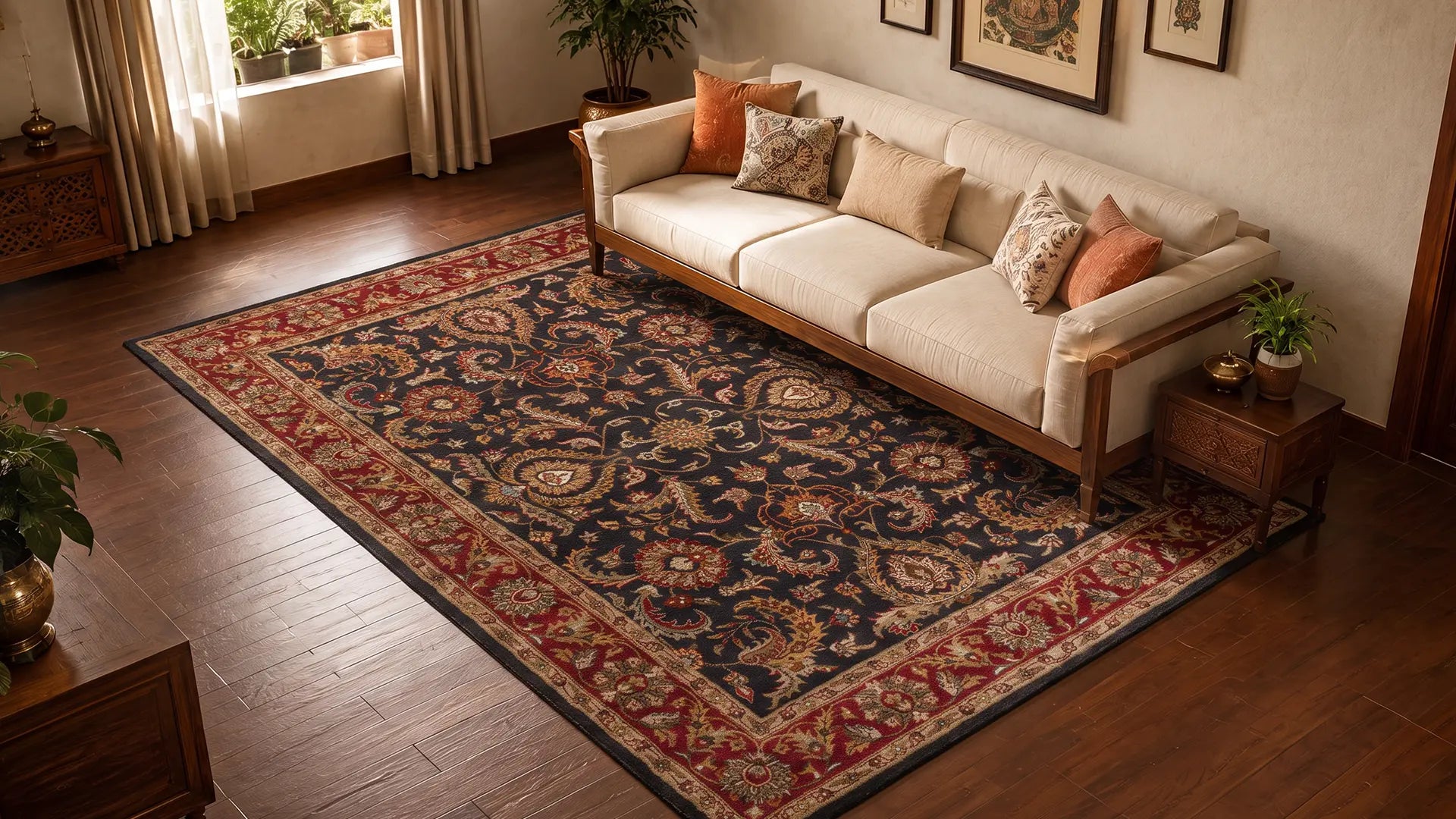
The easiest way to make a room feel newly decorated is to give it a focal point. A statement rug can perform that job beautifully because it naturally attracts attention without demanding additional wall space. Imagine a neutral living room with a beige sofa, wooden coffee table and soft cream curtains. Now place a rug featuring deep rust, muted gold, burgundy or earthy blue beneath the seating area. Suddenly, the furniture feels more intentional, and the room has a visual story. Add a few cushions that borrow one or two colours from the rug, introduce warm lighting and perhaps place brass or ceramic accents nearby. You have created a festive atmosphere without replacing the sofa or changing the flooring.
The trick is to let the rug do the talking. If you choose an elaborate pattern, keep some surrounding elements relatively restrained. If the room already contains colourful upholstery or dramatic artwork, choose a rug with a quieter design that supports rather than competes with those features. In 2026, rug collections are increasingly showcasing expressive patterns, artistic designs and organic forms, reinforcing the idea that a rug can function almost like artwork for the floor. (Wallpaper*)
A statement rug is particularly useful when you are hosting guests because it immediately changes the perceived atmosphere of the gathering space. People may not consciously say, “That rug transformed the colour composition of the room,” but they will feel that the room looks warmer and more finished. That is the magic of good interior styling: the best changes often feel obvious without being obvious.
Choose Colours That Work with Festive Lighting
Festive lighting deserves special attention because the same rug can look dramatically different during the day and evening. Warm lighting tends to intensify rich, earthy and jewel-inspired tones, while cooler lighting can make some colours appear flatter. Current festive décor guidance is placing strong emphasis on warm, layered illumination and colour palettes built around earthy neutrals, terracotta and deeper jewel tones. (Abbott Fab)
Before purchasing a festive rug, look at your existing lighting. Do you use warm LED bulbs, lamps, fairy lights or diyas in the evening? If so, consider colours such as rust, mustard, terracotta, camel, olive, deep green, burgundy or muted gold. These shades can create a warm relationship with festive illumination. If your room already contains strong colours, a cream, beige, taupe or softly patterned rug may provide the balance you need.
The goal is not to make every object in the room match. Instead, select a small colour family and allow the rug to connect different elements. A rust detail in the rug can echo a cushion, a brass accent can connect with warm metallic décor, and a neutral background can tie everything together. Think of the rug as the thread running through the entire festive composition.
2. Refresh the Living Room with the Right Rug Size
One of the biggest mistakes people make when buying rugs is focusing on colour before considering size. A beautiful rug can still make a room feel awkward if it is too small. The living room is usually the main gathering space during festivals, so proportions matter enormously. A rug should help define the seating area rather than looking like a small island floating underneath the coffee table. Ideally, the furniture arrangement should visually interact with the rug so that the room feels cohesive.
For a typical living room, consider how the sofa and chairs are positioned before selecting the rug. If possible, allowing at least the front legs of major seating pieces to sit on the rug can help create a unified conversation area. In larger rooms, a generously sized rug can accommodate the complete seating arrangement and make the space feel more luxurious. In smaller apartments, a carefully positioned medium-sized rug can still define the central area without overwhelming the floor.
The festive season is a particularly good time to reassess rug proportions because additional décor often makes rooms feel visually fuller. A rug that already looks slightly undersized can appear even smaller once cushions, flowers, lamps and decorative accessories are added. Conversely, a well-proportioned rug can give the room a sense of structure. Before ordering, measure the seating arrangement rather than simply measuring the empty floor. That one step can prevent one of the most common rug-buying mistakes.
Build Your Seating Area Around the Rug
Instead of treating the rug as the final object placed under existing furniture, try reversing the process. Think of the rug as the foundation and arrange your furniture around it. This approach is especially effective if you are preparing the living room for guests. The rug can define where people naturally gather, where the coffee table sits and how chairs relate to the sofa.
For example, a rectangular rug can anchor a conventional sofa-and-coffee-table arrangement, while an organic or round rug can soften a room dominated by straight furniture lines. Organic rug shapes are gaining attention in 2026 because they introduce movement and soften rigid architectural geometry. (Thepiecraft Rugs)
You can also use a rug to create a separate zone in an open-plan home. A living room that shares space with a dining area does not necessarily need a wall or divider. A rug can quietly tell the eye, “This is the sitting area.” During festivals, that zoning becomes valuable because different parts of the home may serve different purposes at the same time. Guests can gather around the sofa while food is being prepared nearby, children can have their own activity area and the dining space can remain visually distinct.
3. Add Warmth with Traditional and Indian-Inspired Patterns
Festive decorating gives you an excellent opportunity to bring Indian-inspired rug designs into contemporary interiors. Traditional motifs, Persian influences, floral patterns, geometric borders and handcrafted textures can add cultural character without making a room feel old-fashioned. The secret is choosing a design that works with your existing furniture rather than attempting to turn the entire room into a themed space.
A contemporary sofa paired with a traditional-inspired rug can create an appealing contrast. Picture a charcoal or cream sofa, natural wood furniture and a rug featuring subtle vintage motifs in muted rust, beige and olive. The result can feel sophisticated while still carrying a sense of heritage. This balance reflects a broader 2026 interior movement toward combining Indian craft traditions with contemporary design language. (Studio Matrx)
For festive occasions, patterned rugs also have an emotional advantage. They can make a room feel richer and more established, almost as if the space has collected stories over time. Vintage-inspired rugs are seeing renewed interest globally, while contemporary Indian rug trends are also embracing craftsmanship, earthy palettes and expressive patterns. (Rugritual)
If your furniture is already highly decorative, select a rug with a calmer pattern. If the furniture is minimal, a more expressive rug can become the room's personality. Either way, avoid trying to match every motif. A little contrast creates depth. A room where every pattern repeats exactly can feel manufactured; a room where patterns share a colour story but differ in character tends to feel more naturally styled.
4. Layer Rugs for Texture, Comfort and Visual Depth
Rug layering is another way to create a festive look without purchasing an entirely new collection of décor. The basic idea is simple: place a larger, relatively neutral rug underneath a smaller decorative rug to introduce additional texture and dimension. This technique can work especially well in larger living rooms, bedrooms, reading corners and informal seating areas. It creates the same visual effect as layering textiles on a sofa: instead of one flat surface, you get depth.
The key is contrast. You might combine a natural-looking base rug with a patterned hand-tufted piece, or pair a subtle neutral foundation with a smaller vintage-inspired design. The colours should relate to one another without being identical. Texture can provide another layer of contrast. A low-pile base beneath a more tactile upper rug can create visual interest while keeping the arrangement grounded.
Layering also gives you flexibility after the festive season. You can remove the smaller statement rug and continue using the larger base rug throughout the year. That makes the approach more practical than buying décor that only works for one occasion. Current interior trends are increasingly embracing tactile surfaces and richer textures, while 2026 rug trends are moving toward pieces that feel artistic, organic and dimensional. (Homes and Gardens)
Mix Patterns Without Making the Room Feel Busy
The easiest way to mix rug and room patterns is to establish a hierarchy. One pattern should be the star while the others play supporting roles. If your rug has a strong geometric design, keep nearby cushions relatively simple. If the rug contains floral or traditional motifs, choose plain or subtly textured throws. This approach prevents visual competition.
Another useful strategy is colour repetition. Suppose the rug contains cream, rust and olive. You do not need to reproduce all three colours throughout the room. Repeating just one or two accents elsewhere is enough to create connection. The result feels coordinated without looking as though everything was purchased from the same catalogue.
This is particularly useful during festivals because decorative elements are already abundant. Flowers, lamps, candles and festive textiles introduce additional shapes and colours. Your rug should help organize that abundance rather than adding another layer of visual noise.

5. Transform the Bedroom into a Cozy Festive Retreat
The bedroom is often forgotten during festive decorating because attention naturally goes toward the living room and entrance. Yet a rug can make an enormous difference here because bedrooms benefit from softness and warmth. Stepping out of bed onto a comfortable rug immediately changes the sensory experience of the space. It makes the room feel more finished, comfortable and personal without requiring major furniture changes.
For bedrooms, consider colours that encourage calm while still reflecting the festive season. Soft beige, cream, muted terracotta, dusty rose, warm grey, olive or subtle gold accents can work beautifully. If the bedding is plain, a patterned rug can add personality. If the bedding already has a strong print, a solid or gently textured rug can create balance.
Placement matters too. A large rug positioned under the bed can create a luxurious foundation, while runners placed along the sides can provide a practical alternative for smaller rooms. In compact bedrooms, a smaller rug can sit beneath a reading chair or at the foot of the bed, creating a dedicated little zone.
The bedroom does not need to scream “festival.” Sometimes the most successful festive makeover is one that feels atmospheric rather than themed. Warm lighting, fresh bedding, a few flowers and a beautiful rug can create a room that feels special during the celebrations but remains comfortable long after they finish. That versatility is important if you want your home décor investment to work throughout the year.
6. Use Rugs to Refresh Dining, Entry and Pooja Spaces
The living room may get the most attention, but smaller rugs can transform overlooked areas of the home. The entryway is particularly important during festivals because it is the first part of the house guests experience. A tasteful runner or decorative mat can create a transition between the outside world and your carefully styled interior. It can also complement a rangoli, toran, flowers or lamps without competing with them.
The dining area is another opportunity. A rug beneath the dining table can visually anchor the space and make everyday meals feel more intentional during the festive period. However, practicality matters. Choose a rug that allows chairs to move comfortably and consider a construction that is relatively easy to maintain. A highly delicate rug may not be the best choice beneath a table where food and drinks are regularly served.
Pooja areas require a different approach. Rather than choosing something solely for visual impact, consider a low-profile, easy-to-clean rug or runner that complements the surrounding space. Natural and understated colours can work particularly well alongside brass lamps, flowers and wooden furniture. The objective is to create warmth without distracting from the spiritual character of the area.
Smaller rugs are also useful in balconies, reading corners and transitional spaces. They give you an inexpensive way to spread the festive mood throughout the home without making every room look identical. That creates a more sophisticated decorating strategy: different spaces can have their own personality while sharing a common colour or texture language.
7. Choose Practical Rugs That Stay Beautiful After the Festival
A festive makeover should not create a maintenance headache. Before purchasing a rug, think about how the room will actually be used. Will children be playing there? Will guests walk through the space frequently? Will people sit on the floor? Is the area exposed to sunlight? Could food or drinks be spilled? These questions are more important than simply asking whether the rug looks attractive in a photograph.
Indian homes have specific practical considerations, including dust, seasonal humidity, monsoon conditions, frequent floor use and the tradition of sitting close to the ground. Rug selection therefore needs to consider fibre, construction and cleanability alongside colour and design. Recent guidance focused specifically on Indian homes highlights these factors as central to choosing rugs that remain attractive over time. (Thepiecraft Rugs)
If your household experiences heavy foot traffic, a durable construction can be more valuable than an extremely delicate design. If the rug is going beneath a coffee table in a relatively quiet sitting room, you have greater flexibility. For bedrooms, comfort may take priority. For entrances, easy cleaning may matter more. There is no universal “best rug”; there is only a rug that suits the way you use a particular space.
Materials, Maintenance and Everyday Durability
Material affects both appearance and performance. Wool is known for comfort and durability, while cotton and other natural fibres can offer different combinations of softness, breathability and maintenance requirements. Handmade rugs can bring texture and craftsmanship into the room, while machine-made options may offer different practical advantages depending on construction and budget.
Regular maintenance is surprisingly simple when done consistently. Vacuum according to the rug's construction and traffic level, address spills quickly rather than allowing them to settle, rotate the rug periodically if certain areas receive more traffic, and follow the manufacturer's cleaning recommendations. Avoid aggressive cleaning methods simply because a stain is stubborn; the wrong technique can damage fibres or colour.
Before the festive season, give your rug a proper cleaning rather than waiting until after guests arrive. A clean rug provides a better visual foundation for all the décor you add on top. Once the celebration is over, continue treating it as part of your everyday home rather than storing it away unless the material or design genuinely requires seasonal storage.
How to Choose the Perfect Festive Rug
Choosing a festive rug becomes much easier when you work through the decision in the right order. Start with room size and furniture placement, then consider colour, pattern, material and maintenance. Do not begin with a photograph you saw online and try to force your room to resemble it. Your flooring, natural light, furniture scale and wall colours are unique, so the rug needs to respond to your space rather than the other way around.
|
Room |
Rug Style to Consider |
Festive Colour Direction |
Key Priority |
|
Living Room |
Statement, traditional or abstract |
Rust, beige, olive, burgundy, gold accents |
Size and visual balance |
|
Bedroom |
Soft, textured or subtle pattern |
Cream, taupe, terracotta, dusty rose |
Comfort |
|
Dining Room |
Flatweave or easy-care design |
Neutral, earthy or muted pattern |
Maintenance |
|
Entryway |
Runner or decorative mat |
Terracotta, mustard, natural tones |
Durability |
|
Pooja Area |
Low-profile, understated rug |
Cream, beige, muted gold |
Easy cleaning |
|
Kids' Room |
Playful, durable design |
Warm colours or gentle patterns |
Safety and maintenance |
Next, decide what role you want the rug to play. Is it supposed to be the star of the room, or should it quietly connect other elements? If your furniture is neutral, you have greater freedom to experiment with colour and pattern. If your sofa, curtains and artwork already make strong statements, a quieter rug may produce a more balanced result. Current 2026 trends support both approaches, with expressive artistic rugs appearing alongside warm neutral and tactile designs. (Wallpaper*)
Finally, think beyond the festival itself. A good festive rug should ideally remain useful once the lights come down and the decorations return to their boxes. That is one reason warm neutrals, earthy colours, subtle vintage motifs and organic designs are practical choices. They can feel festive when surrounded by lamps, flowers and metallic accents but still look natural on an ordinary Tuesday morning.
The best makeover is rarely the one that makes your home look completely different. It is the one that makes the same home feel better.
Conclusion
A festive home makeover with rugs does not require a huge budget, a complete renovation or a house full of new furniture. A thoughtfully selected rug can change the way a room feels by introducing colour, texture, warmth and visual structure. Whether you choose a statement rug for the living room, a cozy piece for the bedroom, a runner for the entrance or a layered arrangement for a larger space, the right rug can become the foundation of your festive décor.
The strongest 2026 interior trends are moving toward warmth, tactile materials, earthy colours, craftsmanship and more personal spaces. (Rug Store) That makes rugs particularly relevant because they combine several of these qualities in one versatile home accessory. They can connect modern furniture with traditional décor, soften hard flooring, define seating areas and create a welcoming atmosphere for guests.
So before you start buying another collection of decorative objects, look down. Your floor may be offering the biggest opportunity for transformation. Choose a rug that works with your room, your lifestyle and your personal sense of style, then let the rest of the festive décor build around it. When the colours are right, the proportions feel natural and the textures work together, even a familiar room can suddenly feel ready for celebration.
FAQs About Festive Home Makeovers with Rugs
What colour rug is best for festive home décor?
There is no single colour that works for every home, but warm earthy shades such as terracotta, rust, mustard, camel, olive, beige and muted gold can complement festive interiors particularly well. Jewel-inspired shades such as burgundy and deep green can also create a richer look when used thoughtfully. Current Indian interior trends are showing stronger interest in warm, earthy palettes rather than predominantly cool grey interiors. (Rug Store) The best choice ultimately depends on your existing sofa, curtains, flooring, wall colour and lighting.
Can I use the same rug after the festive season?
Absolutely. In fact, choosing a rug that works beyond the festival is one of the smartest ways to approach a home makeover. Instead of selecting an extremely themed design, choose colours and patterns that can transition into everyday décor. A warm neutral, abstract, vintage-inspired or subtly patterned rug can look festive when paired with lamps, flowers and metallic accessories but remain equally appropriate throughout the year.
What rug size is best for a living room?
The ideal size depends on your room dimensions and furniture arrangement. As a general design principle, the rug should help visually connect the seating rather than appearing like a small mat underneath the coffee table. In larger rooms, placing the front legs of sofas and chairs on the rug can create a unified seating zone. Always measure your furniture arrangement before buying rather than choosing a rug based only on the room's floor dimensions.
Are handmade rugs suitable for Indian homes?
Handmade rugs can be an excellent choice for Indian homes when their fibre, construction and maintenance requirements match the space. They can add craftsmanship, texture and individuality, qualities increasingly valued in contemporary Indian interiors. (Business Standard) However, consider foot traffic, cleaning requirements, humidity, sunlight and how the room is used before selecting a particular handmade construction.
How do I keep my festive rug clean?
Start with regular vacuuming appropriate to the rug's construction and deal with spills promptly. Rotate the rug periodically if one section receives significantly more traffic or sunlight. For deeper cleaning, follow the manufacturer's instructions or use a professional service appropriate for the rug's material and construction. Most importantly, clean the rug before your festive gathering rather than waiting until after it, because a fresh, well-maintained rug provides a much stronger foundation for the rest of your décor.
Latest News & Recent Post