Cart
0
How to Choose the Right Rug for Your Living Room
A living room rug can completely change the way your space looks and feels. The right rug adds warmth, defines different areas, brings furniture together, and gives your interior a finished appearance. On the other hand, choosing the wrong size, material, color, or pattern can make even a beautifully decorated living room feel unbalanced.
With so many rug sizes, colors, patterns, materials, and styles available today, finding the perfect option can feel overwhelming. Should you choose a large area rug or a smaller accent rug? Is wool better than cotton? Should the rug match your sofa, curtains, or flooring? And how do you know which rug size is actually right for your living room?
The good news is that choosing a living room rug becomes much easier when you know what to consider. This guide explains the most important factors to help you select a rug that complements your furniture, lifestyle, interior style, and available space.
1. Start by Measuring Your Living Room
Before looking at colors and patterns, start with the most practical consideration: size.
A rug that is too small can make furniture appear disconnected, while an oversized rug may overwhelm the room. Measure the area where you want to place the rug and consider the position of your sofa, chairs, coffee table, and other furniture.
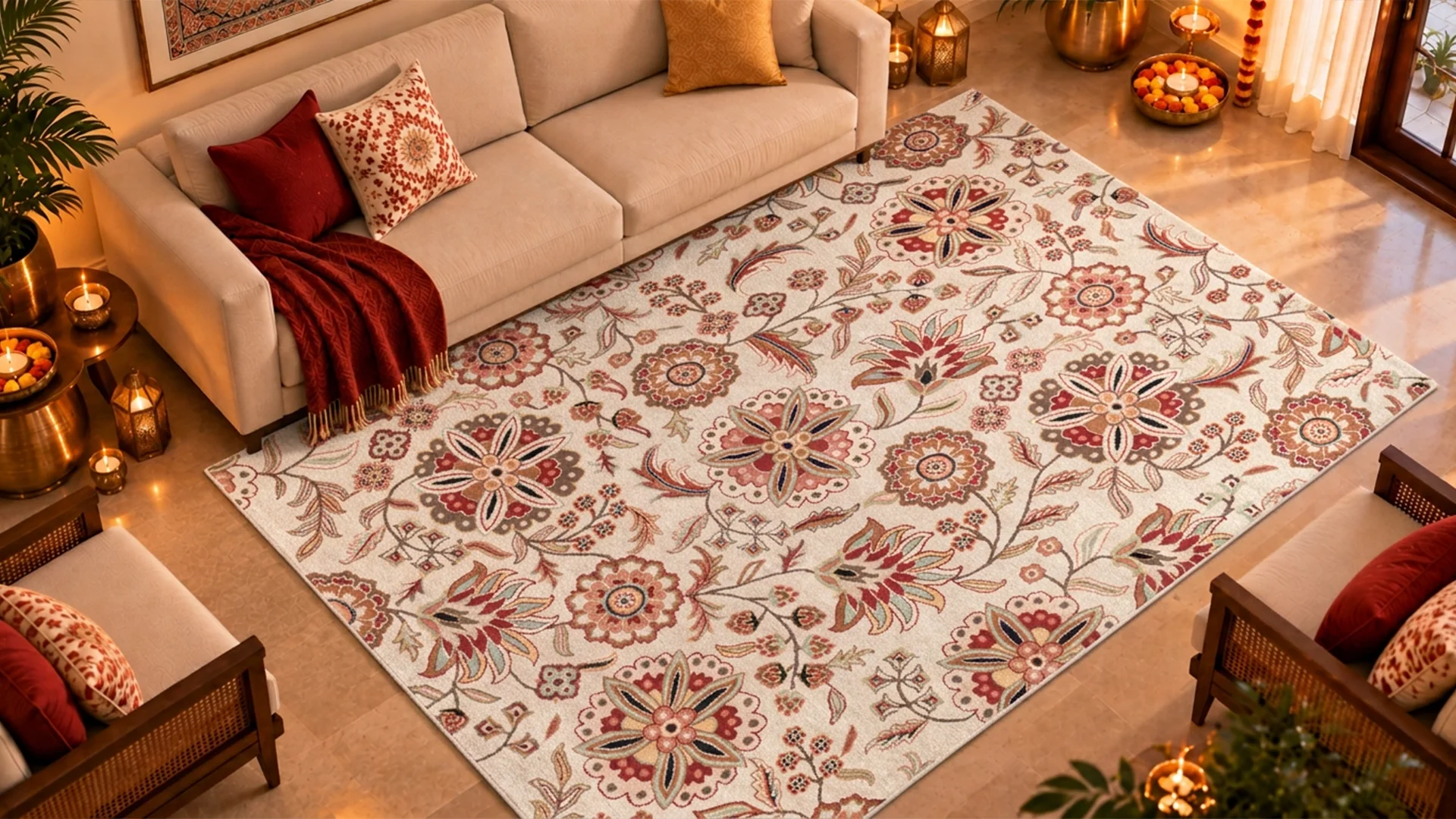
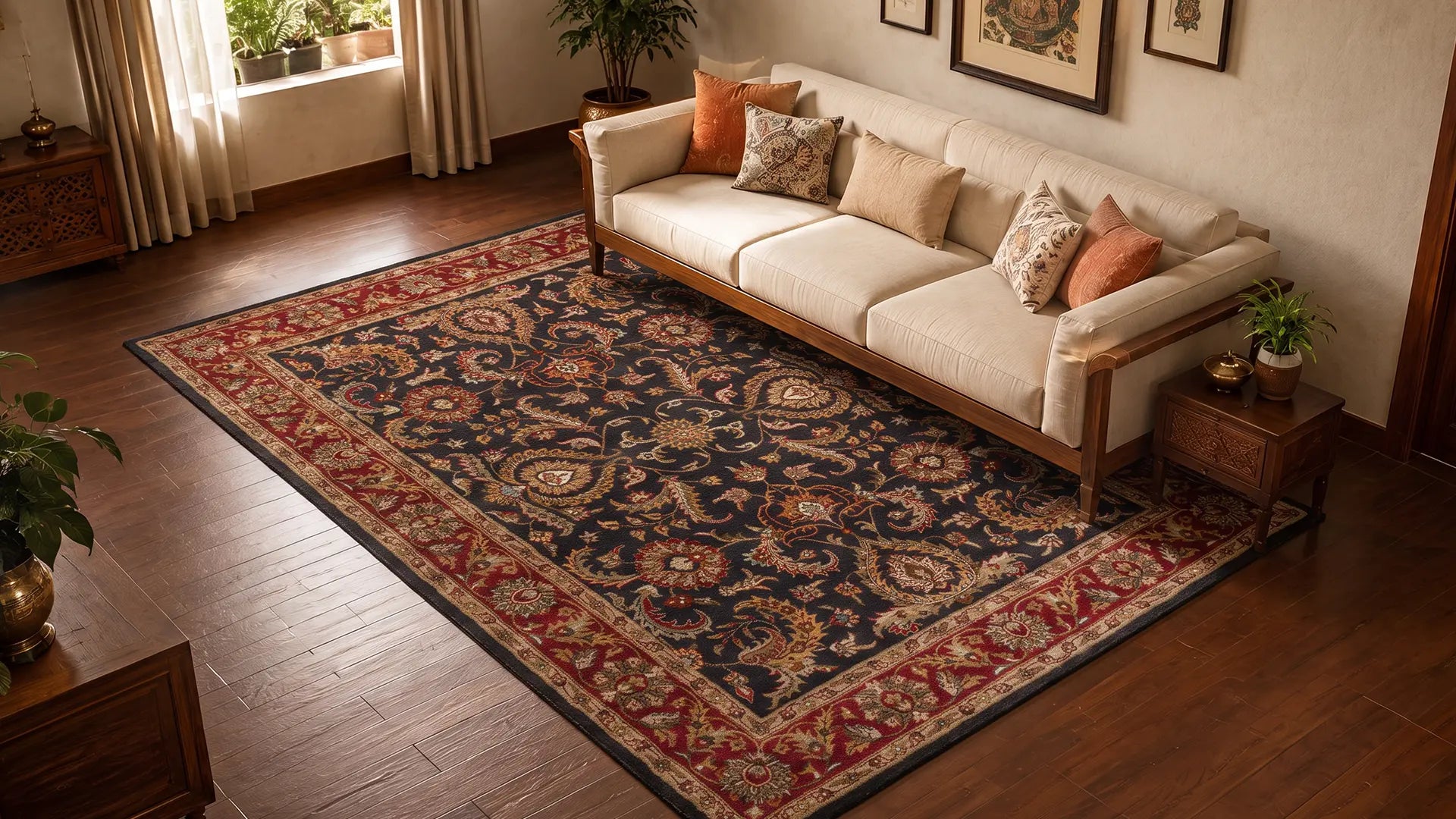
For many living rooms, the rug should be large enough to visually connect the main seating pieces. Ideally, the front legs of the sofa and chairs should sit on the rug. In larger rooms, you may even choose a rug that accommodates all four legs of the furniture.
Common living room rug sizes include:
-
5 × 7 feet: Suitable for compact living rooms or smaller seating arrangements.
-
6 × 9 feet: A versatile choice for medium-sized spaces.
-
8 × 10 feet: One of the most popular sizes for standard living rooms.
-
9 × 12 feet: Excellent for larger rooms with generous seating areas.
-
10 × 14 feet or larger: Suitable for spacious living rooms and open-plan interiors.
Do not automatically choose the smallest rug that fits within your budget. A larger rug can often create a more cohesive and luxurious appearance.
2. Choose a Rug Based on Your Furniture Arrangement
Your furniture layout should influence the shape and size of your rug.
If your sofa, chairs, and coffee table are arranged around a central point, a rectangular area rug can create a strong visual foundation. For an L-shaped sectional, a large rectangular rug is usually a practical choice because it can extend underneath the seating area.
If your living room has a circular coffee table or curved furniture, you could consider a round rug to soften the overall appearance.
Think of the rug as a visual frame for your furniture. Rather than treating it as an isolated decorative item, use it to connect the major pieces in the room.
For example, if the sofa sits entirely outside the rug while the coffee table is placed in the center of it, the room may look visually fragmented. Moving to a larger rug that extends beneath the sofa can immediately create better balance.
3. Consider the Shape of the Room
The shape of your living room can also help determine which rug shape works best.
A rectangular rug is the safest and most versatile option for most living rooms. It works particularly well in long or wide spaces and complements traditional as well as contemporary furniture.
A round rug can be useful when you want to create a softer visual effect. It works especially well beneath round coffee tables, in compact seating areas, or in rooms where you want to introduce more curves.
Square rugs can work in larger square-shaped rooms, while runners may be suitable for narrow spaces or transitional areas connected to the living room.
The key is to create visual harmony between the room's architecture, furniture, and rug.
4. Select the Right Rug Material
The material of your rug affects its appearance, comfort, durability, maintenance, and price. Therefore, it is worth considering how you actually use your living room before making a purchase.
Wool Rugs
Wool is a popular choice for people looking for a comfortable and durable rug. It has a naturally soft feel and can add warmth and texture to a living room.
Wool rugs are particularly suitable for spaces where comfort and long-term use are important.
Cotton Rugs
Cotton rugs are generally lightweight and versatile. They can work beautifully in casual, modern, or relaxed interiors.
They are also available in a wide variety of colors and patterns, making them easy to incorporate into different decorating styles.
Jute and Natural-Fiber Rugs
Jute and other natural-fiber rugs are ideal when you want to introduce an earthy, organic look. Their natural texture can complement wooden furniture, neutral interiors, and contemporary spaces.
However, their texture may not provide the same softness underfoot as wool or plush materials.
Synthetic Rugs
Synthetic materials such as polyester and polypropylene can offer practical advantages, particularly in households that prioritize easy maintenance and everyday durability.
They are available in many designs, making it easier to find an affordable rug that suits your décor.
When selecting a material, think beyond appearance. Consider foot traffic, cleaning requirements, children, pets, comfort, and how frequently you expect to use the room.
5. Think About Your Living Room's Color Palette
Color is one of the most noticeable elements of any rug. Your rug does not necessarily need to match your sofa exactly. In fact, an exact match can sometimes make the room look too uniform.
Instead, look for colors that complement the existing palette.
If your living room already contains several bold colors, a neutral rug in beige, cream, grey, taupe, or muted tones can create balance.
If your furniture and walls are primarily neutral, the rug can become an opportunity to introduce color.
For example, a room with a neutral sofa and light walls could benefit from a rug featuring:
-
Deep blue
-
Terracotta
-
Olive green
-
Rust
-
Charcoal
-
Mustard
-
Soft geometric colors
A useful approach is to choose a rug that contains at least one color already present in the room. This creates a visual connection without requiring everything to match perfectly.
6. Choose Between Neutral and Bold Patterns
The pattern of your rug can dramatically influence the personality of your living room.
A neutral rug with a subtle texture is a good choice if you prefer a calm, sophisticated interior. It allows artwork, cushions, curtains, or furniture to become the main visual features.
A patterned rug, meanwhile, can become the focal point of the room.
Geometric patterns can work well in contemporary interiors, while traditional motifs may suit classic or transitional spaces. Abstract designs can bring an artistic character to modern rooms.
If your furniture already has strong patterns, consider choosing a rug with a simpler design. If your furniture is plain, a patterned rug can add visual interest.
The goal is not to make every element compete for attention.
7. Match the Rug With Your Interior Style
Your living room rug should complement the overall interior design style.
Modern Living Rooms
For modern spaces, consider clean geometric designs, abstract patterns, minimalist textures, or muted colors.
Traditional Interiors
Traditional living rooms can work beautifully with classic motifs, detailed borders, Persian-inspired patterns, and warm color combinations.
Bohemian Interiors
For a bohemian living room, consider layered patterns, rich colors, vintage-inspired designs, and textured materials.
Scandinavian Interiors
Scandinavian spaces generally benefit from simple designs, soft neutral shades, subtle patterns, and natural textures.
Contemporary Interiors
Contemporary rooms offer more flexibility. You can experiment with abstract designs, contrasting colors, subtle textures, and modern geometric patterns.
The best rug is not necessarily the one that follows a particular trend. It is the one that feels naturally connected to the room.
8. Consider Your Lifestyle and Foot Traffic
A beautiful rug is only a good choice if it works with your lifestyle.
Think about how your living room is used every day. Is it a formal space that is rarely used, or is it where your family watches television, eats snacks, plays games, and spends most of the day?
For high-traffic living rooms, prioritize durability and easy maintenance. A low-pile or medium-pile rug may be more practical than an extremely plush design.
If the room is mainly used for relaxing and entertaining, you may have more flexibility to choose a softer and more luxurious option.
Households with children or pets should also consider how easily the rug can be cleaned and how well its color and pattern can conceal everyday marks.
Lifestyle should always come before appearance when making a long-term purchase.
9. Pay Attention to Rug Pile Height
Rug pile refers to the height and density of the rug fibers.
Low-pile rugs have shorter fibers and generally offer a cleaner, more structured appearance. They can also be easier to maintain and move furniture across.
Medium-pile rugs provide a balance between comfort and practicality.
High-pile and shag rugs feel softer and more luxurious underfoot, but they can require additional care and may not be ideal for areas where furniture is frequently moved.
If your living room contains a lot of furniture, a low- or medium-pile rug may provide a more practical solution.

10. Think About Maintenance Before Buying
A rug can look perfect in a showroom or product photograph, but its maintenance requirements matter just as much.
Before buying, consider:
-
How frequently does the rug need vacuuming?
-
Can it handle regular foot traffic?
-
Is professional cleaning recommended?
-
Is the material resistant to everyday wear?
-
Does the pattern hide minor stains?
-
Will furniture leave visible impressions?
-
Is the rug suitable for your household?
A lighter-colored rug may create a bright and elegant appearance, but it can show dirt more easily than a darker or patterned design.
Likewise, a heavily textured rug may look beautiful but could require more effort to clean.
Choose a rug that fits your real daily routine, not just your ideal interior.
11. Create Balance Between the Rug and Sofa
The sofa is usually the largest piece of furniture in a living room, so the rug should work in harmony with it.
If your sofa is a solid neutral color, you have more freedom to choose a patterned or colorful rug.
If the sofa already features a bold color or print, a more restrained rug can help balance the room.
You should also think about contrast. A cream rug against a beige sofa may create a soft monochromatic look, while a dark rug under a light sofa creates stronger contrast.
Neither approach is inherently better. The right choice depends on the atmosphere you want.
For a calm and sophisticated room, stay within a similar tonal family. For a dramatic and energetic interior, introduce stronger contrast.
12. Don't Forget the Coffee Table
The coffee table and rug should feel connected.
For a typical rectangular seating arrangement, placing the coffee table completely on the rug can help anchor the central area. Ideally, there should also be enough rug extending around it to visually connect with the surrounding seating.
A round coffee table can look particularly attractive on a round rug, although contrasting shapes can also create an interesting design effect.
The important thing is to avoid a rug that appears like a small island underneath the coffee table.
13. Layer Rugs for More Texture and Personality
If you want a more relaxed or designer-inspired look, rug layering can be an interesting option.
A larger natural-fiber rug can serve as the base, while a smaller patterned rug is placed on top.
This technique works especially well in:
-
Bohemian interiors
-
Eclectic homes
-
Casual living rooms
-
Large open spaces
-
Rustic interiors
When layering rugs, make sure the colors and textures complement each other. Too many competing patterns can make the room feel chaotic.
A simple base rug paired with a more decorative top rug is often the easiest combination to work with.
14. Consider the Flooring Underneath
Your existing floor should also influence your rug choice.
On dark wood flooring, a lighter rug can create contrast and make the seating area stand out. On light flooring, deeper tones can provide definition.
If your floor already has a strong pattern, such as heavily grained wood or decorative tiles, you may prefer a rug with a simpler design.
For plain flooring, you have more freedom to experiment with patterns and textures.
The rug and flooring should complement one another rather than compete.
15. Use the Rug to Define Open-Plan Spaces
Open-plan homes can sometimes feel visually disconnected because there are no walls separating the living, dining, and other areas.
A strategically selected rug can solve this problem.
Place a large rug underneath the living room seating arrangement to visually define that area. Another rug can potentially identify the dining zone.
This creates separate functional areas without physically dividing the room.
When using multiple rugs in the same open space, they do not need to be identical. However, they should share some relationship through color, material, pattern, or overall style.
16. Choose the Right Rug Color for Your Room's Size
Color can influence how spacious a room feels.
Light-colored rugs can help create a brighter and more open appearance. They are particularly useful in smaller rooms or spaces with limited natural light.
Dark rugs can make a large room feel warmer and more intimate. They can also provide strong visual contrast against light furniture.
If you have a small living room, a large light-colored rug with a subtle pattern may help the room feel more spacious than a small, dark rug.
However, practicality should still be considered. If the room experiences heavy foot traffic, choose a color and pattern that can handle everyday use.
17. Avoid Common Living Room Rug Mistakes
Knowing what not to do can make your decision easier.
Choosing a Rug That Is Too Small
This is one of the most common mistakes. A tiny rug underneath only the coffee table can make the seating arrangement appear disconnected.
Ignoring Furniture Placement
Do not select a rug based only on the empty floor area. Consider how it will interact with your sofa and chairs.
Matching Everything Exactly
Your rug, sofa, curtains, and cushions do not need to be identical. Complementary colors usually create a more sophisticated result.
Choosing Appearance Over Function
A delicate rug may not be the right choice for a busy family room.
Ignoring Door Clearance
If your rug is positioned near a door, check that the pile height does not interfere with opening and closing it.
Buying Without Measuring
Always measure before ordering. Product photographs can make rugs appear larger or smaller than they actually are.
18. How to Choose a Rug for Different Living Room Sizes
Small Living Room
For a compact space, focus on creating the illusion of openness. A medium-sized rug that connects the seating arrangement can work better than a tiny accent rug.
Choose lighter colors and relatively simple patterns if you want the room to feel more spacious.
Medium Living Room
A 6 × 9 or 8 × 10-foot rug can often provide a strong foundation for a standard seating arrangement, depending on the furniture dimensions.
Make sure the rug extends far enough beneath the main furniture pieces.
Large Living Room
Large rooms usually benefit from larger rugs. An 8 × 10, 9 × 12, or larger rug can help prevent the furniture from appearing scattered throughout the room.
In particularly large spaces, consider using rugs to create distinct seating zones.
19. Don't Forget the Rug Pad
A rug pad is often overlooked, but it can make a significant difference.
A good rug pad can help keep the rug in position, reduce unwanted movement, add cushioning, and protect the floor underneath.
It can also improve the overall feel of the rug underfoot.
Choose a rug pad that is appropriate for both the rug and the flooring. The pad should generally be slightly smaller than the rug so that it remains hidden.
20. Think About Long-Term Style
Interior trends change quickly, but a good rug can remain in your home for years.
Instead of choosing a design simply because it is trending, consider whether you will still enjoy it several years from now.
Neutral rugs, timeless patterns, and quality materials can provide greater flexibility if you later change your sofa, wall color, curtains, or other décor.
If you enjoy changing your interior frequently, a more versatile rug can serve as a foundation for different decorating styles.
21. A Simple Checklist Before Buying Your Living Room Rug
Before finalizing your purchase, ask yourself:
-
Have I measured the available space?
-
Does the rug work with my sofa and chairs?
-
Is the size large enough to connect the seating area?
-
Does the color complement my existing décor?
-
Does the pattern work with my furniture?
-
Is the material suitable for my lifestyle?
-
Can I maintain and clean it easily?
-
Is the pile height practical?
-
Does it work with my flooring?
-
Will I still like the design in a few years?
-
Have I considered using a rug pad?
-
Does the rug fit my budget without compromising practicality?
If the answer to most of these questions is yes, you are likely on the right track.
Conclusion: Choose a Rug That Works for Your Space
Choosing the right rug for your living room is about more than finding an attractive design. The best rug combines the right size, suitable material, complementary colors, practical durability, and a style that works with your furniture and overall interior.
Start by measuring your space and understanding your furniture arrangement. Then consider the rug's material, pile, color, pattern, maintenance requirements, and relationship with your flooring. Most importantly, think about how you actually use your living room.
A rug should make the space feel more connected, comfortable, and welcoming. Whether you prefer a minimalist neutral design, a colorful statement rug, a traditional pattern, or a natural-fiber texture, the right choice can become the foundation that brings your entire living room together.
When you choose based on both style and functionality, your living room rug will not simply fill an empty area on the floor—it will help define the character of the entire space.
Latest News & Recent Post