Cart
0
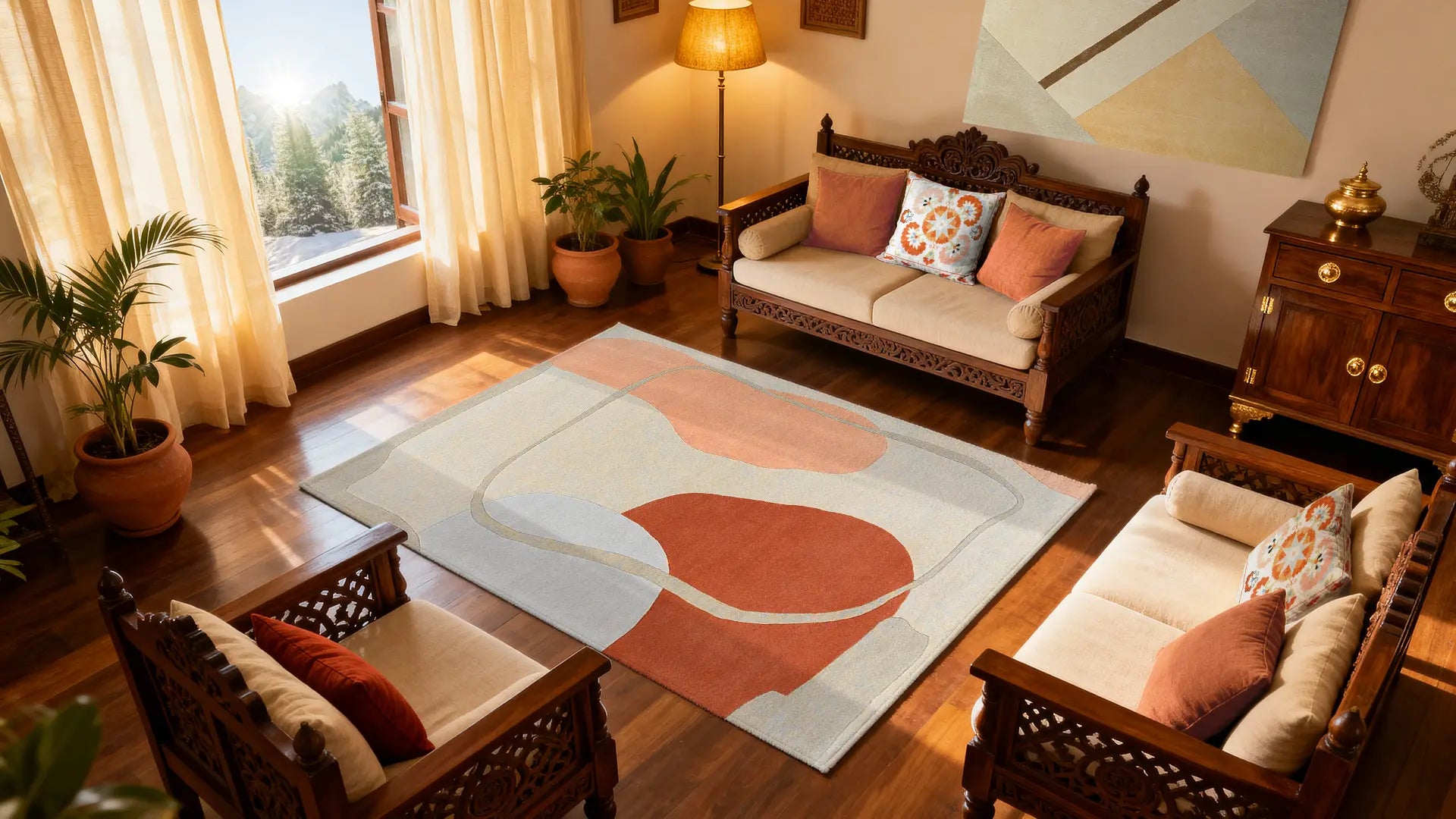
Rugs, often overlooked, are presented as essential elements that significantly impact a space's aesthetics, atmosphere, and functionality. Their importance spans from primal comfort to advanced smart home technology.
I. Everyday Magic of Rugs
✨Style Transformer:
- Define zones and create boundaries in open-plan spaces, acting as "spatial syntax."
- Serve as a canvas for personal expression through color and pattern.
- Frame furniture and direct movement within a room.
🛋️Cozy & Comfy:
- Provide tactile comfort and a "soft landing."
- Act as insulation, trapping heat and reducing heating costs.
🤫Peace & Quiet:
- Absorb sound waves, dampening reverberations and creating a calmer environment.
- Transform busy spaces like offices into more productive and less stressful areas.
🛡️Protection & Safety Patrol:
- Shield floors from scratches, scuffs, and UV radiation damage.
- Offer a non-slip surface and cushioned buffer against falls, enhancing safety for children and the elderly.
🤧Allergen Trap:
- Capture dust, dander, and pollen, preventing them from circulating in the air.
- Requires regular cleaning for effective allergen removal.
🏢Beyond Home:
- Beneficial in commercial spaces for zoning, acoustic balance, and brand identity projection.
II. Ancient, Artistic Roots of Rugs
📜Nomadic Beginnings:
- Originated with nomadic tribes in Central Asia (3rd-4th millennia BC) as essential coverings for warmth, protection, and portability.
- Early flat-woven kilims were precursors to modern pile rugs.
🏛️The Pazyryk Rug:
- A 2,500-year-old rug discovered in a Scythian tomb, representing early artistic achievement and sparking debates about its origin (Armenian or Persian).
🎨Artistry Flourishes:
- With the rise of Islam, "Oriental" rugs became major art forms.
- Persian rugs have a 2,500-year history, with the Safavid dynasty marking a "golden age" of elevated weaving, symbolic meaning, and exquisite detail.
- Turkish, Indian, and Chinese traditions developed unique styles.
- Rugs evolved from essentials to symbols of status, luxury goods, and cultural storytelling.
⚙️Industrial Revolution Impact:
- Mass production made machine-made rugs accessible to a wider audience, democratizing comfort and style.

III. Current Rug Trends & Opinions (2024-2025)
✨Designers' Top Picks:
- Zen Master: Neutral minimalism, monochromatic palettes, layered textures, and "quiet luxury."
- Pattern Party: Bold geometrics, abstract art, checkerboards, and whimsical folk designs.
- Mother Earth Approved: Natural materials (wool, jute, hemp, organic cotton) and recycled fibers.
- Color Confidence: Warm earth tones and nostalgic pastels; rugs as "floor artwork" for bold hues.
- Shape Shifters:Round, organic, and asymmetrical shapes to soften spaces.
- Timeless with a Twist: Vintage and distressed looks with modern sensibilities and updated palettes.
- The Layering Game: Combining textures and patterns.
🛒Consumer Corner: What Makes a Rug "Valuable"?
- Value is subjective, balancing material, durability, aesthetics, and practicality.
- Material: Wool (longevity), synthetics (affordability, stain resistance), jute (natural texture).
- Traffic Report: Low-pile for busy areas, high-pile for cozy spaces.
- Cleanliness: Washable rugs are practical for pet owners and parents.
- Looks & Feel: Personal aesthetic resonance is paramount.
⚠️Practical Ponderings:
- Caution against viscose and silk in high-traffic areas.
- Opt for tight weaves to resist shedding and wear.
IV. Rugs' Dirty Little Secrets & Debates
🧼Maintenance Meltdown:
- Professional cleaning can be costly.
- DIY cleaning risks dye bleeding, damage, and mold.
- Washable rugs offer a solution but may have material limitations and fitting challenges.
🤧Allergies: Friend or Foe?
- Debate on whether rugs trap or harbor allergens.
- High-pile rugs and VOCs from synthetics can exacerbate allergies.
- Consensus favors low-pile, natural fiber rugs with regular cleaning using HEPA vacuums.
🌎Environmental Footprint:
- Synthetic rugs: non-biodegradable, energy-intensive production, VOC emissions, microplastic shedding.
- Natural fibers: resource-intensive production (wool), chemical treatments.
🤝Ethical Knots:
- Industry issues include unfair labor practices, unsafe conditions, and child labor.
- Consumers can support certifications like GoodWeave, GOTS, and Fair Trade.
- Demand transparency and beware of "greenwashing."
V. The Rug of Tomorrow: Smart, Sustainable, and Seriously Cool
🧠 Rugs Get a Brain
- "Smart rugs" with embedded sensors can track foot traffic, detect spills, monitor temperature, and correct posture.
- Potential for fall detection in the elderly and movement tracking for workouts.
🌐IoT Power
- Connectivity with smart home systems (Alexa, Google Home) for controlling lighting, music, and cleaning robots.
🤖 AI as Your Interior Designer
- Virtual visualization tools for pre-purchase viewing.
- AI-driven customization for personalized designs.
🌱Super Materials & Eco-Innovation
- Nanotechnology for stain resistance and easy cleaning.
- Phase-change materials for temperature regulation.
- Antimicrobial and air-purifying fibers for health benefits.
- Sustainable materials: Regenerated nylon (ECONYL®), recycled PET yarn, plant-based dyes, and carbon-negative production.
🏠The Ultimate Home Hub
- Rugs will become integral, functional components of smart, sustainable, and connected living spaces.
Conclusion
Rugs have evolved from basic necessities to artistic expressions and are now becoming intelligent components of our homes. They offer comfort, style, and increasing intelligence, with future rugs poised to be even more advanced.


Latest News & Recent Post