Cart
0
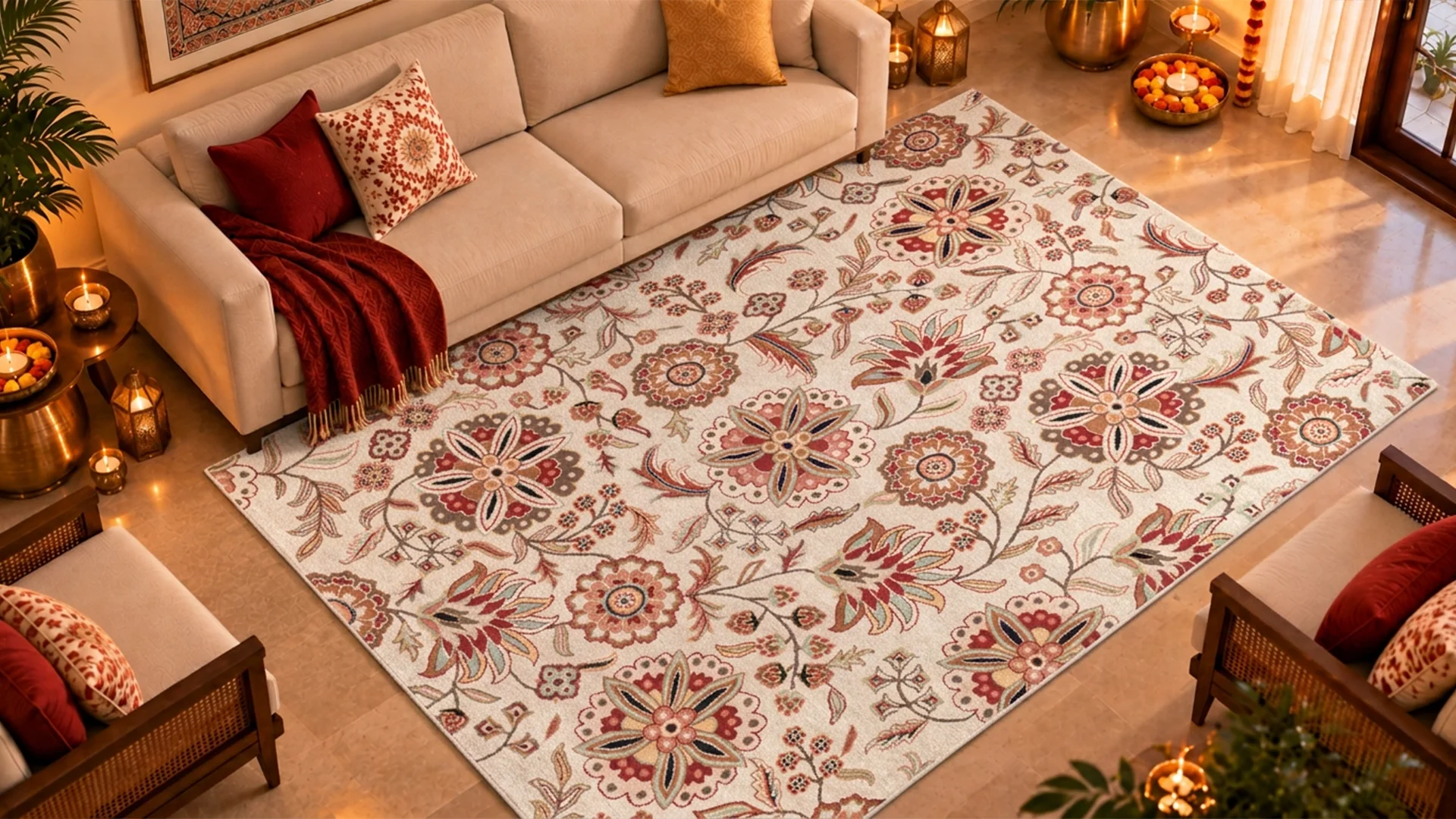
Ever eyed those stunning handmade rugs, the kind that seem to whisper tales of faraway lands and ancient artistry, and thought they were only destined for palaces (or at least, budgets the size of one)? Think again.
India, a land practically synonymous with vibrant culture and meticulous craftsmanship, holds a treasure trove of handmade rugs – and increasingly, these masterpieces are not only more accessible than ever but surprisingly affordable. And with delivery options spanning the globe, that perfect statement piece for your living room is closer than you think.
We're about to embark on a journey that spans centuries, continents, and countless meticulously tied knots. From the opulent courts of Mughal emperors to the ethically conscious homes of today, we'll explore the captivating story of Indian rugs. We'll delve into the cultural significance woven into every fiber, examine the trends shaping the market, confront the ethical considerations that matter, and, most importantly, arm you with the knowledge to find that one rug that speaks to your soul and fits your budget.
A Thread Through Time: The Royal Roots of Indian Rug Craftsmanship
Let's rewind the clock to the 16th century. Imagine the court of Emperor Akbar, a patron of the arts with a vision for unparalleled grandeur. It was during his reign that Persian weaving techniques were introduced to India, sparking a rug-making legacy that would ripple through generations. These weren't mere floor coverings; they were symbols of power, luxury, and exquisite taste. These rugs commanded respect and were often seen as items of ultimate luxury and status.
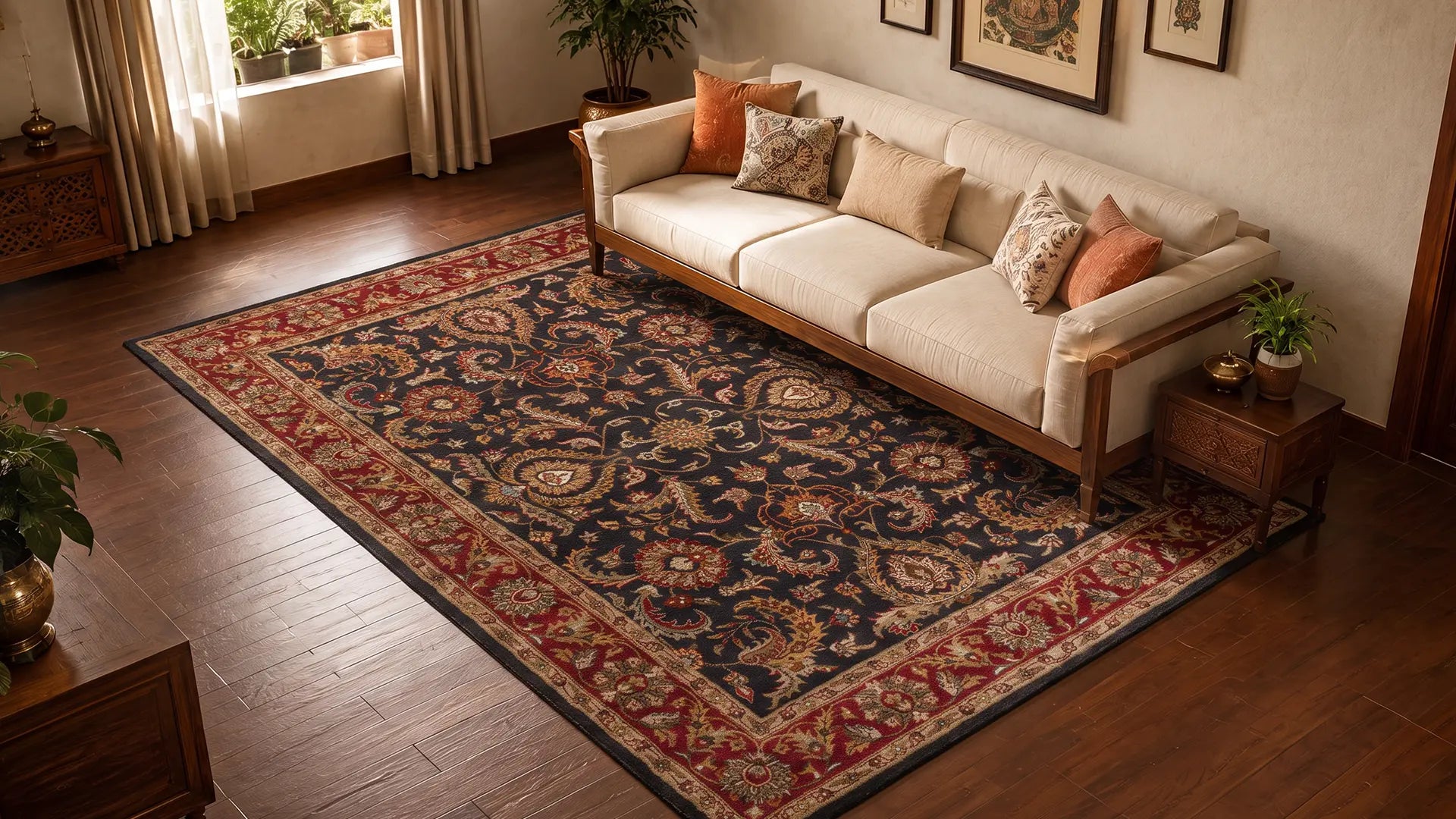
From these royal beginnings, the craft began to bloom across the country, each region developing its own distinctive style. Think of Bhadohi, often dubbed "The Carpet Capital" due to its historical importance. Or Agra, famed for its intricate designs and luxurious materials. Jaipur, with its bold colors and geometric patterns, and Kashmir, renowned for its silk rugs and delicate floral motifs. These legendary weaving centers became cradles of creativity, each imbuing its creations with a unique regional flavor.
But these rugs are more than just visually stunning; they're imbued with cultural meaning. Woven into every knot are stories of nature, spirituality, and even wishes for good fortune. Motifs passed down through generations carry the weight of tradition, transforming these textiles into tangible pieces of cultural heritage. Over time, the demand broadened from exclusive royal commissions to a wider embrace within homes across the globe, these rugs transitioned from objects of royal luxury to a beloved art form, cherished for their beauty, durability, and the stories they carry.
The Buzz Today: Why Everyone's Falling for Indian Handmade Rugs
In a world saturated with mass-produced goods, the allure of the handmade has never been stronger. Today's consumer is seeking authenticity, uniqueness, and pieces with a story to tell – qualities that Indian handmade rugs possess in abundance. The consumer demand, particularly from millennials and Gen Z, is fueled by a desire for personalized, eco-friendly, and narrative-rich home decor. There is an interest in investing in lasting quality and uniqueness, driving interest in handmade Indian rugs as an "affordable luxury."
The artisans who create these rugs are the heart and soul of the industry. In traditional weaving hubs, skills are passed down through generations, ensuring that ancient techniques are not only preserved but also adapted to meet contemporary tastes. Increasingly, these artisans are embracing online platforms, connecting their incredible work directly with a global audience, cutting out the middleman and ensuring fair compensation for their efforts.
The numbers don't lie: India is a global leader in the handmade rug market, with the world looking to its artisans for exceptional quality and design. Several key trends are shaping the future of the industry. Customization reigns supreme, with consumers seeking tailor-made designs to perfectly complement their homes. Sustainability is no longer a niche concern but a driving force, with a huge push for eco-friendly materials and ethical production processes. And clever weaving techniques like hand-tufting offer the coveted handmade look without the premium price tag of hand-knotting. Wool's durability and cotton's versatility and comfort continue to be highly valued.
Unraveling the "Rough Edges": Tackling the Controversies & Quality Questions
It's crucial to acknowledge that the journey of Indian handmade rugs hasn't always been smooth. The industry has faced significant challenges, particularly concerning labor practices and ethical sourcing. The history of child labor, forced labor, and unsafe working conditions casts a long shadow, one that demands continued vigilance and proactive solutions.
Fortunately, organizations like Good Weave, Care & Fair, and STEP are at the forefront of the fight for fair trade, ethical sourcing, and safe working environments. Through rigorous certification programs, they're working to ensure that artisans are treated with respect and dignity. As consumers, we hold immense power. By choosing certified rugs, we can actively support ethical practices and empower artisans to thrive.
And let's address the question of affordability. Does "affordable" necessarily mean "low quality"? Absolutely not. The key lies in understanding what makes a great handmade rug and knowing what to look for. Knot density is a crucial indicator of quality: the more knots per square inch, the finer the detail and the greater the rug's durability. Natural fibers like wool, silk, and cotton are superior choices, offering longevity, luster, and a luxurious feel. The weaving style also impacts price and durability, with hand-knotted rugs representing the pinnacle of craftsmanship, hand-tufted rugs offering excellent value, and flat-weave rugs providing a lightweight and versatile option. The type of dyes utilized (natural vs. chemical), also have a significant impact on the final product. And those slight imperfections you might notice? They're not flaws; they're the mark of an artisan's hand, a testament to the rug's authenticity and unique character.

The Future Underfoot: What's Next for India's Rug World?
The future of Indian handmade rugs looks exceedingly bright. The industry is poised for continued growth, fueled by rising incomes, a growing global appetite for unique home decor, and the increasing ease of access facilitated by e-commerce. The power of online platforms is undeniable, bridging the gap between artisan and buyer and making these exquisite rugs available to customers worldwide. Social media plays a vital role in inspiring new trends and showcasing the artistry behind these creations.
Innovation and evolution are also key drivers of the industry's future. We can expect to see an even greater emphasis on eco-friendly materials, such as bamboo silk, recycled yarns, and organic cotton, as well as a wider adoption of natural dyes. Design is also evolving, with a fusion of tradition and contemporary trends – bold colors, geometric patterns, minimalist aesthetics, and global fusion styles. Modern production techniques, such as 3D carving, are being integrated with age-old craftsmanship, pushing the boundaries of creativity. And government initiatives like "Skill India" are playing a vital role in keeping traditional crafts thriving. While challenges remain, such as rising raw material costs and market competition, the industry is proactively addressing these issues by emphasizing ethics, quality, and sustainable practices.
Conclusion: Step Onto a Story, Delivered to Your Home
Bringing an Indian handmade rug into your home is more than just a decorating decision; it's a statement of style, a nod to history, and a direct investment in the livelihoods of talented artisans. It's about surrounding yourself with beauty, authenticity, and a tangible connection to a rich cultural heritage.
So, are you ready to explore the vibrant world of affordable, handmade Indian rugs? Your perfect piece, a testament to centuries of artistry and a unique expression of your personal style, awaits. Step onto a story, delivered right to your doorstep.


Latest News & Recent Post