Cart
0
Small Space Styling: Why Shaped Rugs Work Better Than Rectangular Rugs
Designing a small space is both an art and a science. Whether you’re styling a compact apartment, a cozy bedroom, or a tight office corner, every design decision matters. One of the most underrated yet impactful elements in small-space styling is the rug. While rectangular rugs have long been the default choice, modern interior design is shifting toward something more dynamic—shaped rugs.
In this comprehensive guide, we’ll explore why shaped rugs work better than rectangular rugs in small spaces, how they transform visual perception, and how you can use them strategically to elevate your interiors.
Understanding Small Space Challenges
Before diving into rug shapes, it’s important to understand the challenges that come with small spaces:
-
Limited floor area
-
Visual clutter
-
Restricted movement
-
Lack of defined zones
These challenges often make rooms feel cramped and less functional. The goal of smart styling is to create illusion, flow, and functionality—and this is where shaped rugs shine.
What Are Shaped Rugs?
Shaped rugs are any rugs that deviate from the traditional rectangular or square form. These include:
-
Round rugs
-
Oval rugs
-
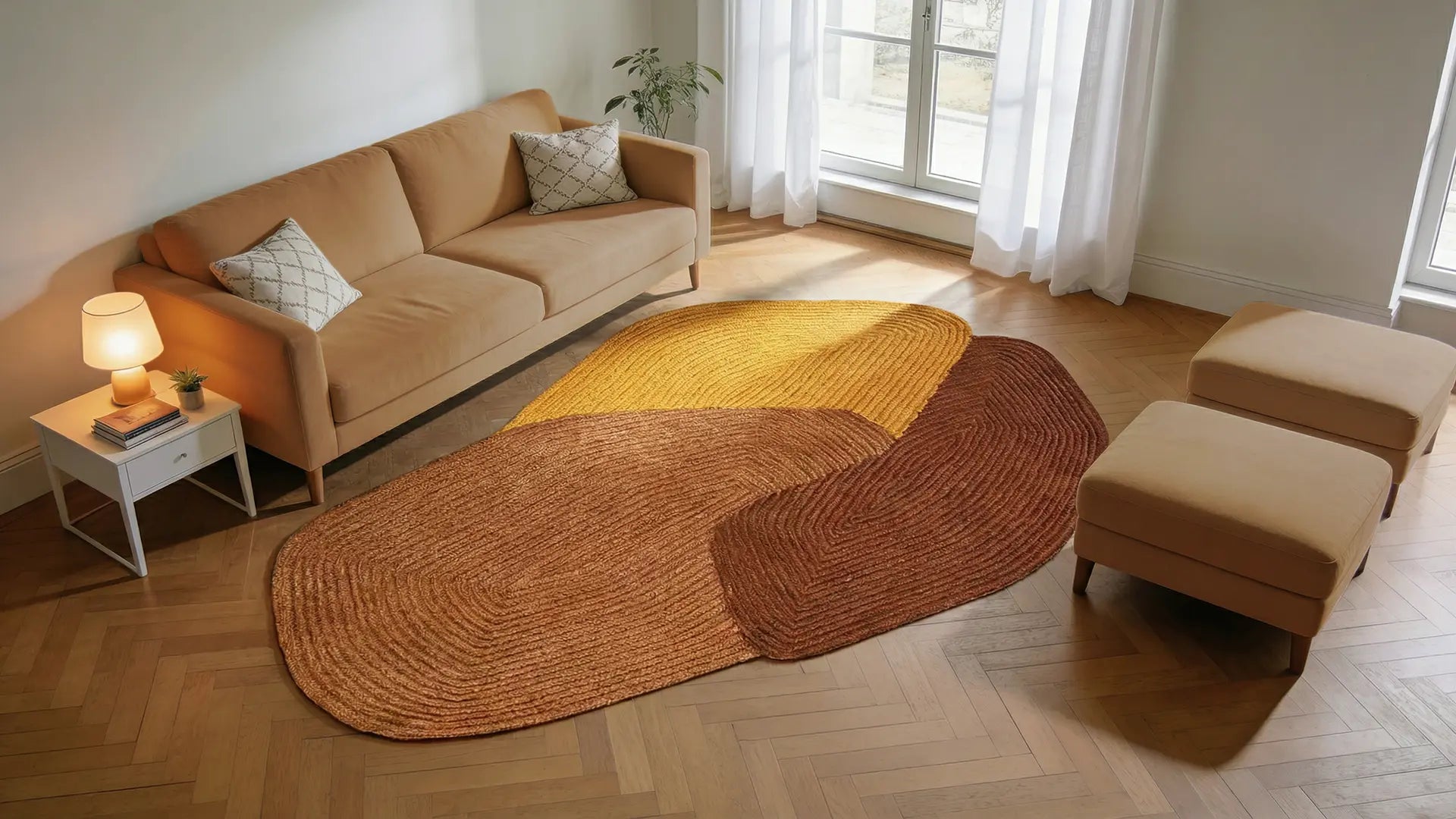
Abstract or irregular shapes
-
Geometric rugs (hexagon, triangle, etc.)
Unlike standard rugs, these designs add movement, softness, and personality to a room.
Why Rectangular Rugs Fall Short in Small Spaces
Rectangular rugs are popular because they’re versatile and easy to place. However, in small spaces, they can create certain limitations:
1. Boxy Appearance
Rectangular rugs often reinforce the box-like structure of small rooms, making them feel even tighter.
2. Rigid Layout
They force furniture into predictable layouts, reducing creativity.
3. Visual Heaviness
Large rectangular rugs can dominate the floor and overwhelm the space.
The Psychology of Shapes in Interior Design
Shapes influence how we perceive a space. Here’s how:
-
Straight lines (rectangles): Structured, formal, confined
-
Curves (round/oval): Soft, fluid, open
-
Abstract shapes: Creative, dynamic, modern
In small spaces, curved and irregular shapes help break monotony and make rooms feel more breathable.
How Shaped Rugs Enhance Small Spaces
1. Create Visual Flow
One of the biggest advantages of shaped rugs is their ability to guide the eye naturally. Unlike rigid rectangular rugs, shaped rugs create a sense of movement, making the room feel larger.
2. Break the Box Effect
Small rooms already have four walls forming a box. Adding another rectangle (rug) reinforces this structure. Shaped rugs disrupt this pattern, adding visual interest.
3. Define Zones Without Clutter
In studio apartments or multifunctional rooms, shaped rugs can:
-
Define a reading corner
-
Highlight a coffee table
-
Separate a workspace
All without making the space feel overcrowded.
Round Rugs: The Small Space Hero
Why Round Rugs Work
Round rugs are particularly effective in compact areas because they:
-
Soften sharp corners
-
Make movement feel natural
-
Fit well in tight layouts
Best Use Cases
-
Under a small dining table
-
In entryways
-
In kids’ rooms
-
Beside the bed
Pro Tip: Pair a round rug with curved furniture for a harmonious look.
Oval Rugs: The Perfect Balance
Oval rugs combine the best of both worlds—structure and softness.
Benefits:
-
Elongate small rooms
-
Fit narrow spaces like hallways
-
Add elegance without harsh edges
They’re ideal when you want a subtle shift from traditional shapes.
Abstract and Irregular Rugs: Bold & Space-Enhancing
If you want your space to stand out, abstract-shaped rugs are your best bet.
Why They Work:
-
Add personality
-
Act as a focal point
-
Distracted by room size limitations
These rugs are perfect for modern homes where creativity matters.
Geometric Rugs: Smart Space Optimization
Geometric shapes like hexagons or asymmetrical designs can:
-
Maximize floor usage
-
Fit unconventional layouts
-
Add a contemporary vibe
They’re especially useful in awkward corners or angled rooms.

Space Illusion: Making Rooms Look Bigger
Shaped rugs are powerful tools for creating optical illusions:
1. Expanding Visual Boundaries
Curved edges trick the eye into perceiving more space.
2. Reducing Clutter Perception
Irregular shapes break uniformity, making clutter less noticeable.
3. Enhancing Depth
Layering shaped rugs can add dimension without overcrowding.
Styling Tips for Using Shaped Rugs
1. Keep Furniture Minimal
Let the rug stand out by avoiding overcrowding.
2. Use Light Colors
Light-toned rugs make spaces feel airy and open.
3. Layer Smartly
Layer a shaped rug over a neutral base rug for added texture.
4. Align with Focal Points
Place the rug where you want attention, like under a coffee table.
Best Materials for Small Space Rugs
Choosing the right material is just as important as shape:
-
Cotton: Lightweight and easy to clean
-
Wool: Durable and soft
-
Jute: Natural and space-friendly
-
Synthetic fibers: Budget-friendly and versatile
For small spaces, opt for low-pile rugs to avoid bulkiness.
Common Mistakes to Avoid
1. Choosing Oversized Rugs
A rug that’s too big can overwhelm the room.
2. Ignoring Proportions
Always match the rug size with the furniture scale.
3. Overusing Patterns
Too many patterns can make the space feel chaotic.
4. Poor Placement
Incorrect positioning can disrupt flow instead of enhancing it.
Budget-Friendly Styling Ideas
You don’t need a big budget to transform your space:
-
Use layered rugs for a designer look
-
Try DIY painted rugs for custom shapes
-
Shop for multi-purpose rugs
Smart styling is about creativity, not cost.
Shaped Rugs for Different Rooms
Living Room
Use a round or abstract rug to create a cozy seating area.
Bedroom
Place a shaped rug beside the bed for a soft landing.
Kitchen
Add a small geometric rug near the sink for style and comfort.
Entryway
Make a statement with a bold-shaped rug.
Why Shaped Rugs Are the Future of Small Space Design
Interior design trends are moving toward fluid, organic, and personalized spaces. Shaped rugs perfectly align with this shift because they:
-
Encourage creativity
-
Improve spatial perception
-
Add uniqueness
They’re not just functional—they’re design statements.
Conclusion
When it comes to small space styling, every detail matters—and rugs play a bigger role than most people realize. While rectangular rugs have their place, they often reinforce the limitations of compact rooms. On the other hand, shaped rugs offer flexibility, visual flow, and a modern aesthetic that can completely transform a space.
From round and oval rugs to abstract and geometric designs, these versatile pieces help break monotony, define zones, and create the illusion of a larger, more open area. By choosing the right shape, size, and placement, you can turn even the smallest space into a stylish and functional haven.
If you’re looking to upgrade your interiors, it’s time to move beyond traditional choices and embrace the power of shaped rugs for small spaces—a simple change that delivers a big impact.


Latest News & Recent Post